For many institutions, capturing complete and accurate researcher profiles remains a time-intensive process, particularly when key information exists in CVs and other unstructured documents.
With AI-Assisted Profile Curation in Symplectic Elements, we’re making it easier to turn that content into structured, high-quality data, faster and at scale. Building on our auto-harvesting data capabilities, already used by tens of thousands of researchers and administrators worldwide, we are introducing an additional suite of features designed to further reduce the burden of building rich, comprehensive, and accurate profiles.
Available to Digital Science-hosted Elements customers. AI Credits required.
Reducing manual effort with AI-assisted data entry
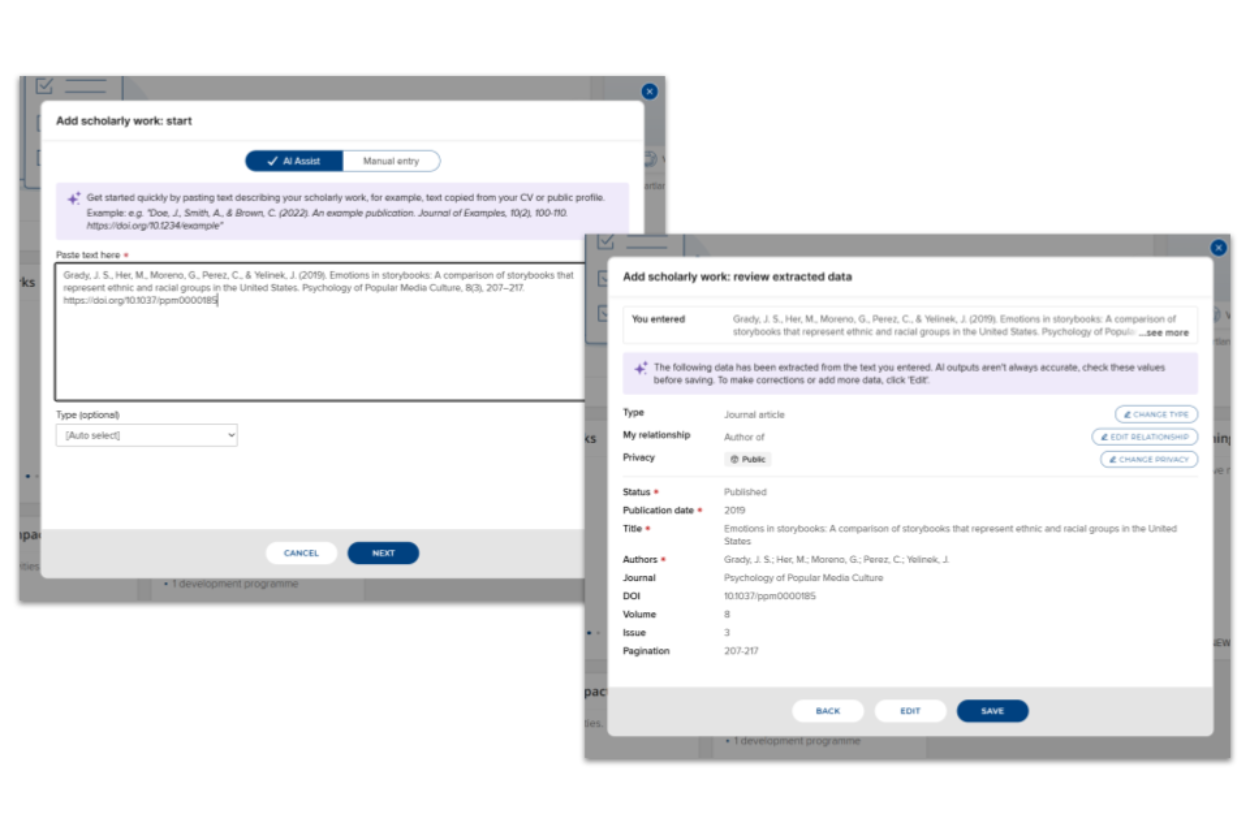
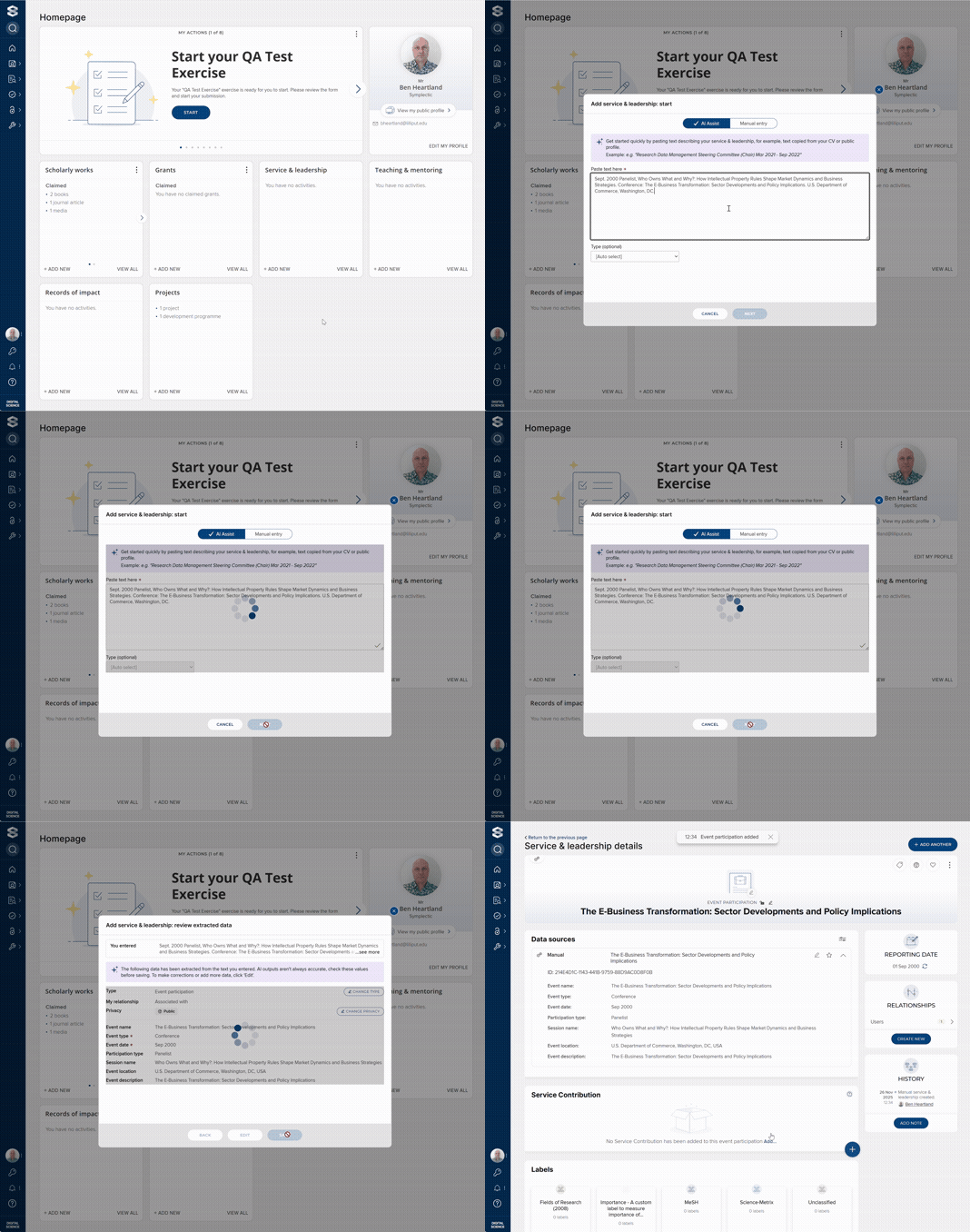
Introduced in Symplectic Elements 7.2, AI-assisted data entry enables users to create records by pasting plain text into Elements.
Structured metadata is extracted in seconds, allowing users to review and confirm records quickly. This supports a range of content, including publications, grants, teaching, and professional activities, helping reduce reliance on manual data entry.
Improving data quality and control
In Symplectic Elements 7.3, we introduced enhancements focused on data quality and governance.
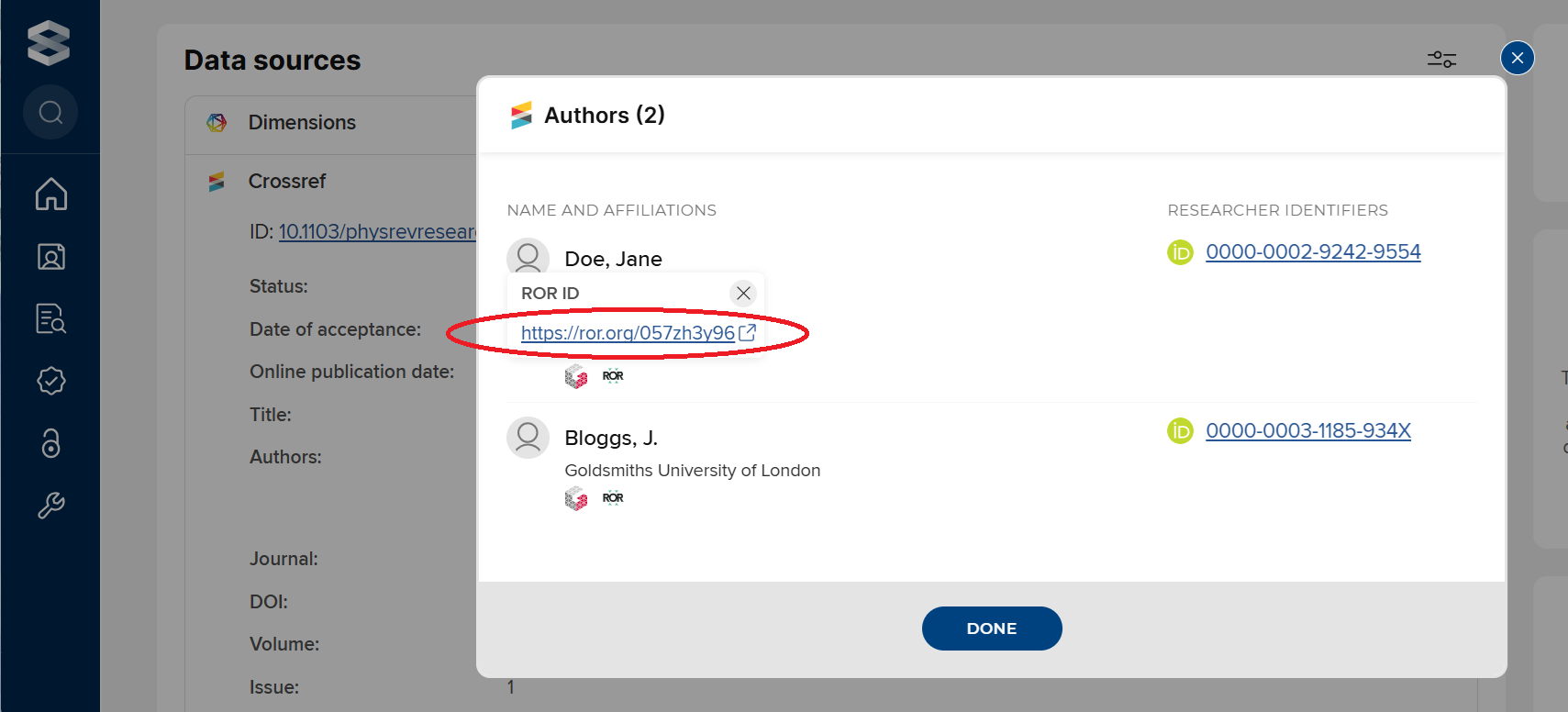
Expanded matching across identifiers such as Dimensions IDs, PMCID, arXiv IDs, and Scopus EIDs helps identify potential duplicates earlier in the process. Extracted data is also checked against existing records in Elements to further reduce duplication.
At the same time, new group- and user-level access controls allow institutions to manage how AI-assisted features are rolled out, supporting oversight and controlled adoption.
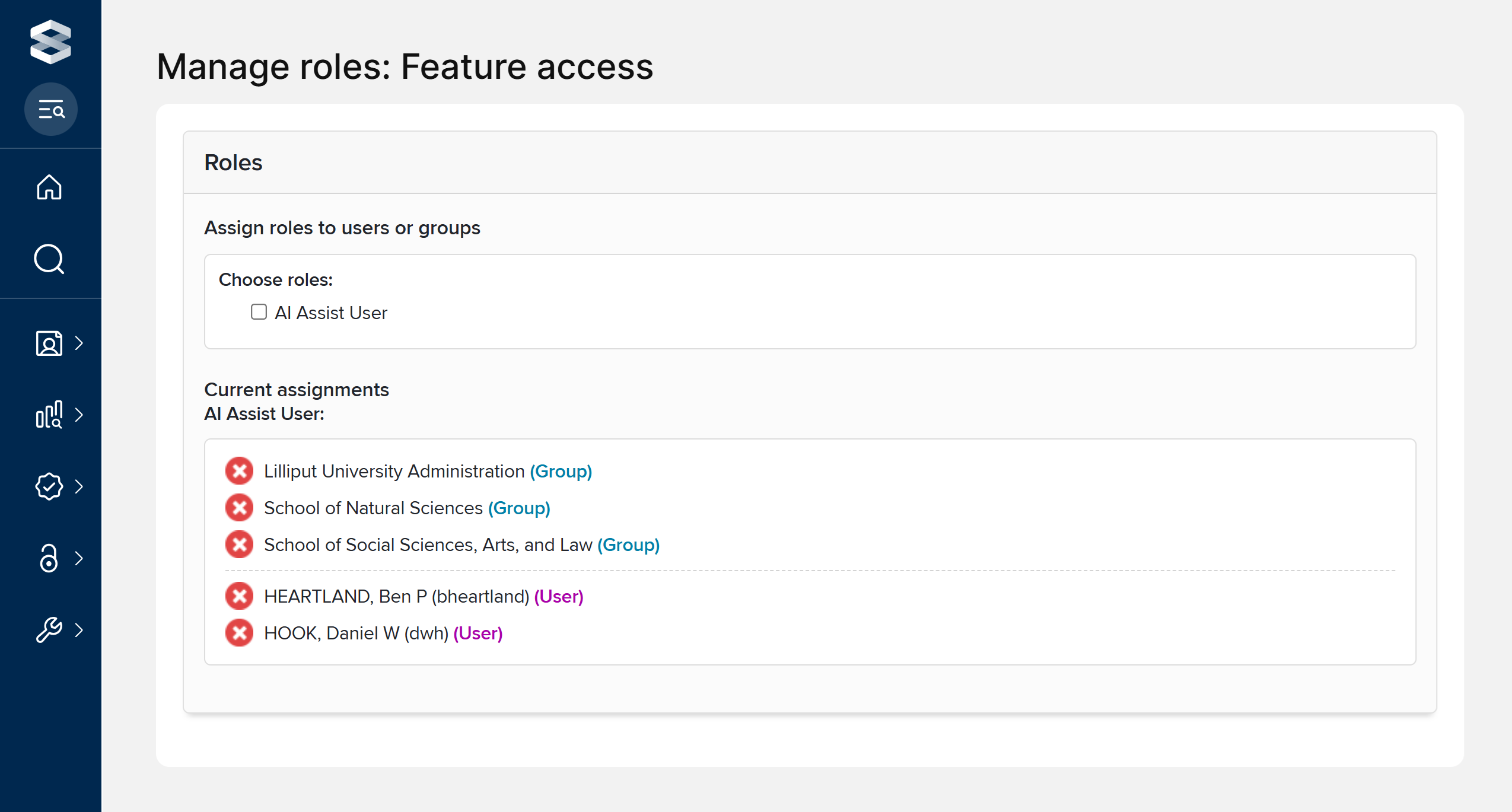
Supporting real-world workflows
At the University of Oregon, AI-assisted data entry is already helping reduce the effort required to capture faculty activity data across publications, teaching, service, and grants, particularly for content not consistently available in external sources.


University of Oregon’s experience using the AI-assisted entry tool has helped us implement the system quickly at the university, has particularly supported the data collection for faculty in our professional schools, and has encouraged faculty and administrator buy-in. Our faculty provide their activity information in the system quickly and in a more standardized and readable manner, which means we are then able to use it for all of our major faculty reviews (e.g., annual, promotion and tenure, post-tenure).
What’s next: CV import
Coming in Symplectic Elements 7.4, CV import will extend this approach further, enabling users to upload a CV or paste full-text content and automatically generate structured records.
A guided workflow will allow users to review, edit, and confirm extracted items before they are added, supporting both individual updates and large-scale profile population.
From documents to data at scale
Together, these developments mark a shift from manual data entry to more scalable, assisted approaches to profile curation, helping institutions improve data quality, reduce administrative burden, and build more complete researcher profiles.