In research information management, longevity isn’t just about time — it’s about trust.
For 20 years, the solution now known as Symplectic Elements has supported research institutions in managing, validating, and showcasing their scholarly activity. What began as a response to a simple but critical question — how can we automate the digital collection of scholarly outputs? — has evolved into a trusted foundation for research information management worldwide.
From the era of paper CVs to advanced automation, and now into AI-assisted curation, Symplectic Elements has grown alongside the needs of the global research community, helping institutions ensure their data is accurate, complete, and ready to drive meaningful insight and impact. What once required enormous manual effort could now be managed efficiently, accurately, and at scale.
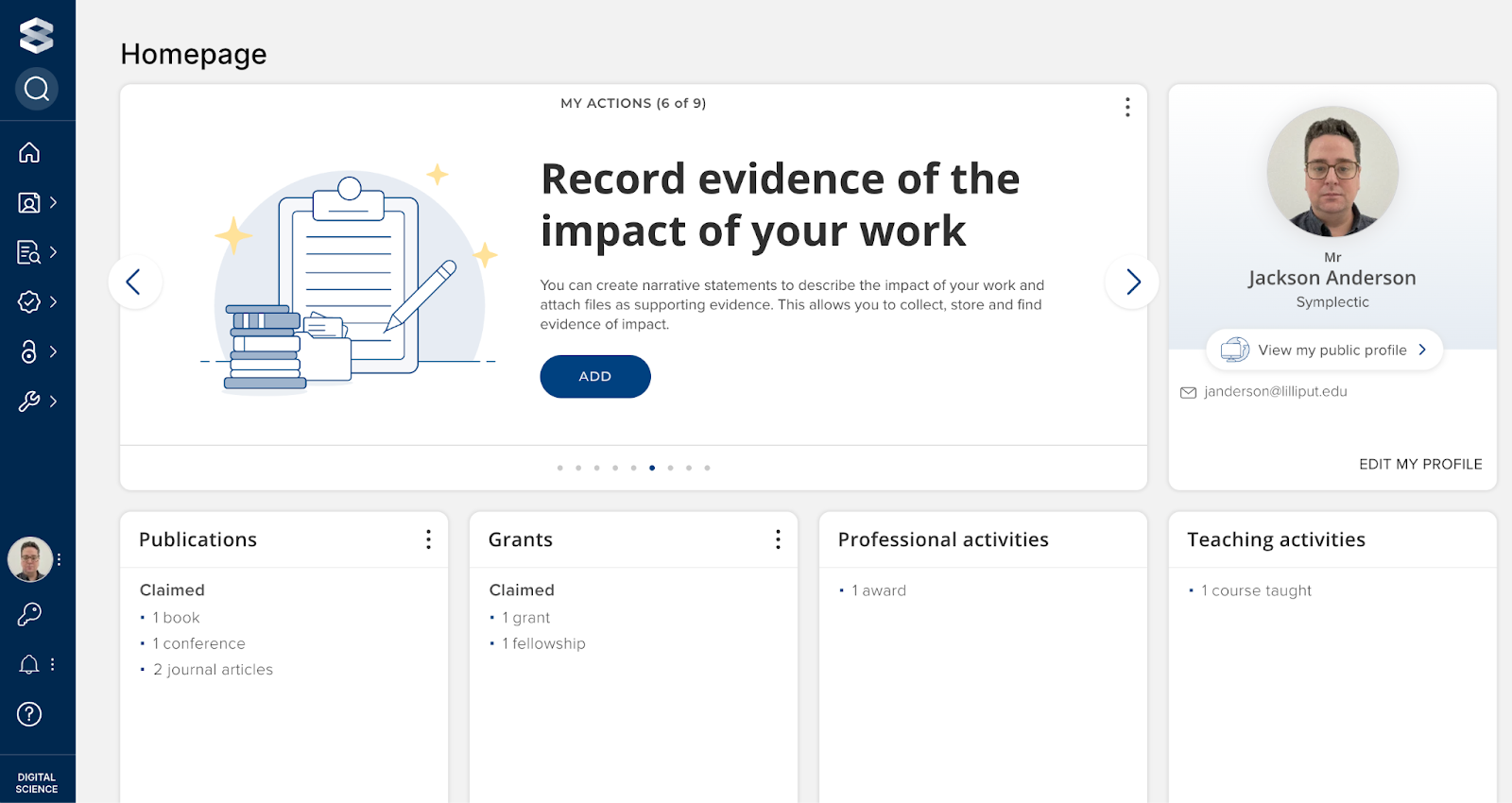
Today Kate Byrne is Digital Science’s Senior Vice President for Product (Academic), but she knows all too well the manual challenge of collecting and validating scholarly activities from her former role at UNSW Australia. At the university, her and a team of metadata specialists worked to painstakingly validate and maintain the profiles of thousands of faculty members. When Symplectic Elements provided them with the ability to automatically associate and claim dozens or hundreds of activities by claiming a single researcher’s ID, it was “life changing.”
Symplectic Elements was born at Imperial College London, created by researchers who understood that research information management was not simply about reporting — it was about credibility, visibility, and trust in institutional data.
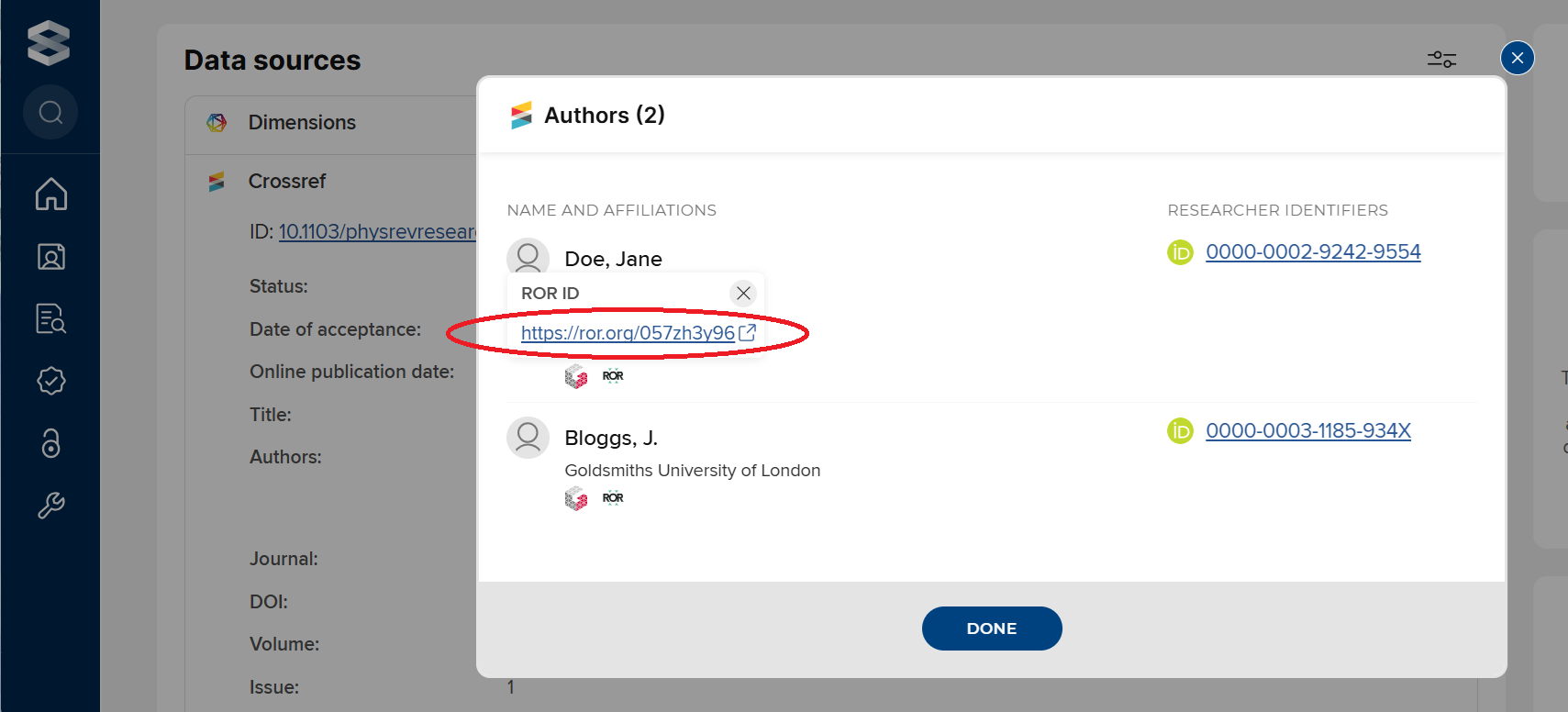
By leveraging intuitive data feeds and APIs, Symplectic Elements brings trusted data from the right sources directly into researcher profiles. This focus on using comprehensive data from the institution’s ecosystem has allowed Symplectic Elements to grow into an unrivaled source of truth for research institutions around the world. Enduring integrations with trusted data sources like Dimensions and ORCID, and essential connections with internal institutional data feeds, put the completeness of the researcher profile at the heart of research information management.
Longstanding Symplectic Elements’ client, Victoria University, reflects that the solution has been “steadily doing the background work that keeps our research information accurate & visible” with “less manual checking, fewer inconsistencies, and research outputs appearing in our systems sooner.” Symplectic Elements data and reporting “now forms the backbone of our new Research Performance framework. When planning for the future, having a system we trust has made all the difference.”
As discussed in a recent case study, Indiana University selected Symplectic Elements after years of working with home grown and partial solutions.
For the first time, we have a robust single source of record for faculty information: productivity, publications, mentorship, courses, and more. Symplectic Elements has very quickly become something essential to the way we think about and manage faculty in the future.
Willie Miller, Associate Vice Provost for Faculty Affairs
Indiana University
Across its 20-year journey, Symplectic Elements has continually adapted to changes in the research ecosystem, from increasing compliance demands to growing expectations around transparency, discoverability, and research visibility. Today that means continuous improvement and evolution to keep pace with the research landscape and AI innovations.
In the years that have followed Symplectic Elements’ creation, the rise of AI has brought opportunities and challenges. AI’s speed has helped us innovate, providing seamless data curation tools that allow researchers to review and populate their profiles in moments. AI has also fundamentally changed how public users seek and encounter answers online and has exposed the weaknesses of AI web-scraping for less-than-credible data. Thankfully a modern solution like Symplectic Elements works closely with new technology, to ensure the most accurate and robust data is made available to AI indexing and therefore brought to top of the online searcher’s results.
In an era of rapid technological change, the role of reliable, validated research data has never been more important and Symplectic Elements continues to work hand-in-hand with community and technology to achieve the best, most impactful outcomes for research organizations around the world.
Stellenbosch University
What brought you to Symplectic Elements when you first joined the community?
“We, at Stellenbosch University, needed a system that could manage the particular requirements for our annual statutory reporting to government on research publications to claim subsidy. With the adaptation of the ACM to our purposes, we have been able to report successfully, and so garner funding.” Stellenbosch University
Victoria University of Wellington
How has Symplectic Elements supported collaboration across different teams or departments?
“As Symplectic Elements in our setup pulls in HR, teaching course and supervision, publication, and grants data amongst others, it has ensured that different departments need to work together so that changes made are reflected appropriately and processes are consistent where they need to be.” Victoria University of Wellington
Karolinska Institutet
“We wanted to reduce as much manual work as possible for our researchers and reach a high data quality, so we have about seven different integrations with KI systems feeding data automatically into Elements. Researchers can manually add what they want for their CVs, and the data is visible to internal and external users within an hour.” Karolinska Institutet
Victoria University
How Symplectic Elements has evolved?
“Over the years, we’ve watched Elements become much better at automatically finding and matching publications from places like Crossref, PubMed, Scopus, and Web of Science.
This has meant less manual checking, fewer inconsistencies, and research outputs appearing in our systems sooner, which our researchers definitely appreciate.
We’ve also noticed improvements in the day‑to‑day experience, such as:
– More dependable ORCID integration
– Smarter duplicate detection and merging
– Clearer status indicators
– A more intuitive interface that keeps user input to a minimum
These changes add up to a system that simply feels easier to use. “ Victoria University
Carnegie Mellon University
“We’ve really incorporated the labelling practices of the Sustainable Development Goals into our overall adoption and strategy of Symplectic Elements.” Carnegie Mellon University
University of Tasmania_1
Do you feel the platform has grown with your institution’s needs? If so, how?
“The platform has continued to grow with our institution’s evolving needs. When we first went live, we launched the Engagement (Professional Activities) module and were impressed by how quickly and enthusiastically researchers began using it to share their often impact‑focused service and engagement activities. We also recognise that there is still substantial, mission‑aligned capability within the platform that we have not yet activated. We anticipate expanding into this untapped potential over the next 12–18 months.” University of Tasmania
Queen Mary University of London
“The rate of deposit has increased by 1000% within 12 months following the switch-on of the publication prompt in Symplectic Elements.” Queen Mary University of London
University of Technology Sydney (UTS)
What projects are you most proud of accomplishing with the help of Symplectic Elements over the last ten years?
“There are many projects, but one in particular is the Distilling Research Impact initiative where we use Symplectic Elements to embed research impact planning, capture and narrative development. Launched in 2018 in response to growing national and international expectations around engagement and impact, the project enabled ongoing capture of engagement activities and evidence during projects, and supports the development of robust, evidence-based impact narratives through collaboration between researchers and professional staff. By leveraging existing systems and centralising impact data, the initiative strengthened institutional memory, built capability across the university, and enabled the generation of a portfolio of impact case studies now used for awards, promotions, reporting and strategic decision making. “ University of Technology Sydney
Stellenbosch University_2
If you were describing Symplectic Elements to a colleague at another institution, what would you say?
“Symplectic Elements aids Stellenbosch University in its essential annual reporting for subsidy to the DHET. The level of support that we have received from the Symplectic Elements team from beginning to end has been outstanding. Their response time and assistance during critical times have been truly exceptional and they played a big part in ensuring a successful submission of the record number of publications for subsidy. We would encourage fellow HEIs in South Africa to invest in and implement Symplectic Elements.“ Stellenbosch University
University of Auckland
“The University of Auckland has been using Symplectic Elements to manage core research infrastructure for well over a decade. Symplectic Elements has streamlined workflows for researchers and professional staff, it underpins public researcher Discovery Profiles, and provides a trusted, shared source of research data for institutional reporting.
Symplectic Elements has grown with the University’s needs – recognising a wider range of research outputs, supporting evolving policy and open access expectations, and enabling far better collaboration between teams across the University.
Symplectic Elements underpins Discovery Profiles, allowing researchers to present rich, up-to-date profiles with less administrative effort. Discovery Profiles have significantly increased the visibility of researchers’ work and made it easier for collaborators, students, and partners to find and connect with the University.” University of Auckland
Oklahoma State University
“Symplectic Elements impressed us with its simplicity, flexibility and control for individual faculty members, and great responsiveness with customer service.” Oklahoma State University
Discover Symplectic
Learn more about Symplectic Elements and request a free, no-obligation demo.